Quick Answer: Main Differences Between 1:1 and 3:1
| Selection Factor | 1:1 Epoxy Resin | 3:1 Epoxy Resin |
|---|---|---|
| Primary Positioning | Common starting point for small molds and decorative products | Direction for products requiring higher cured hardness |
| Measuring Method | Equal-volume measurement, easier to understand and train | Requires accurate 3:1 measurement by weight |
| Cure Cycle | Usually faster within the current product positioning | Usually slower, depending on formula and temperature |
| Cured Hardness | Suitable for ordinary small craft products | Higher-hardness direction within the current product positioning |
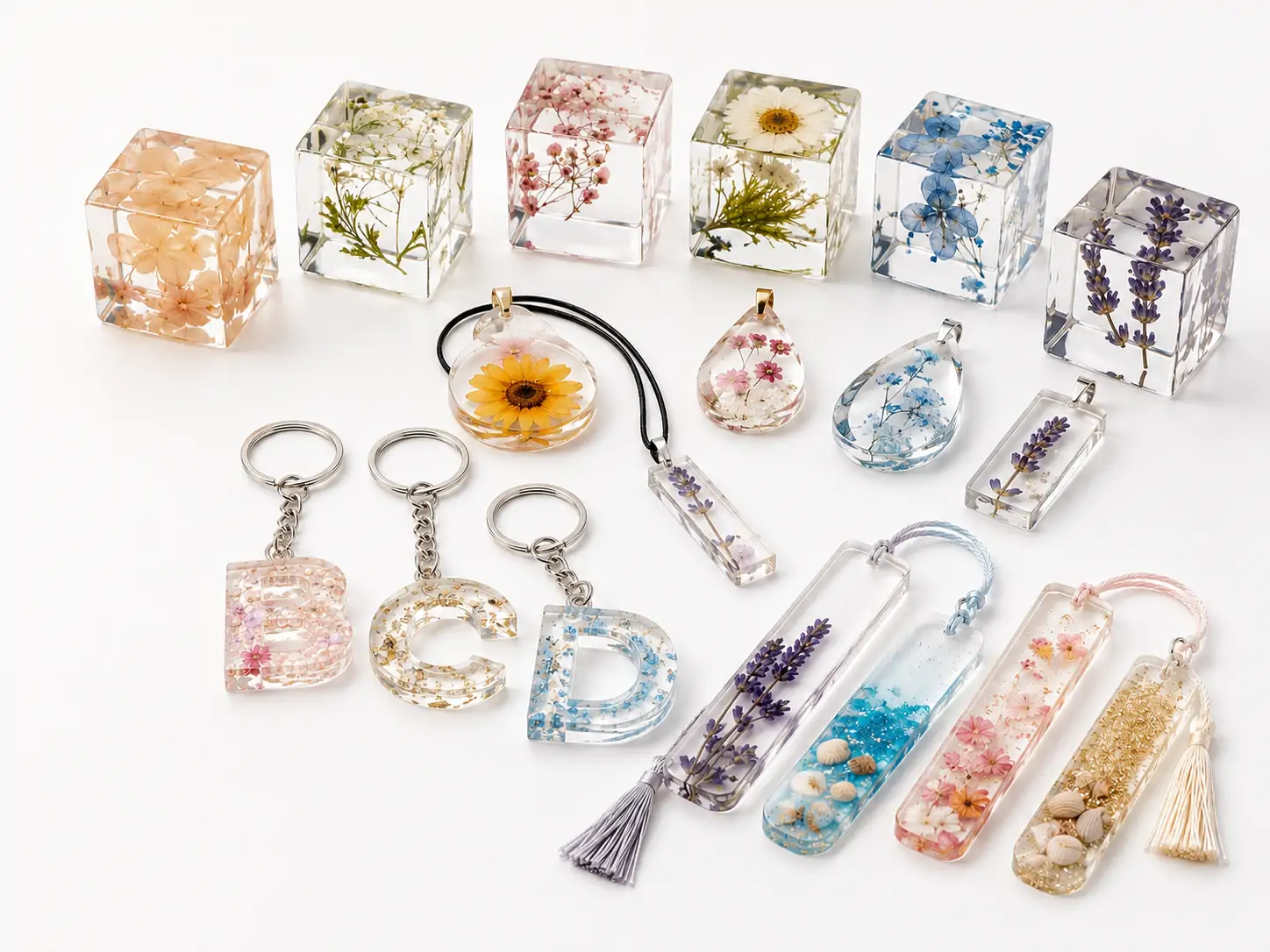
| Typical Applications | Jewelry, keychains, alphabet molds, flower specimens and small ornaments | Small decorative products requiring a harder surface |
These differences describe product directions only. They do not mean that every 1:1 or 3:1 formula has identical performance. The selected formula TDS and actual sample testing should remain the final reference.
When Should You Start with 1:1 Epoxy Resin?
For most small craft and decorative-mold projects, begin by evaluating the 1:1 system.
1:1 epoxy resin is measured by equal volume. This makes it easier for operators to understand, train and repeat during manual measurement or small-batch production.
Within the current product positioning, 1:1 usually has a faster cure direction and is suitable for many small-mold export applications.
Typical applications include:
- Resin earrings, pendants and jewelry components
- Alphabet and number molds
- Keychains
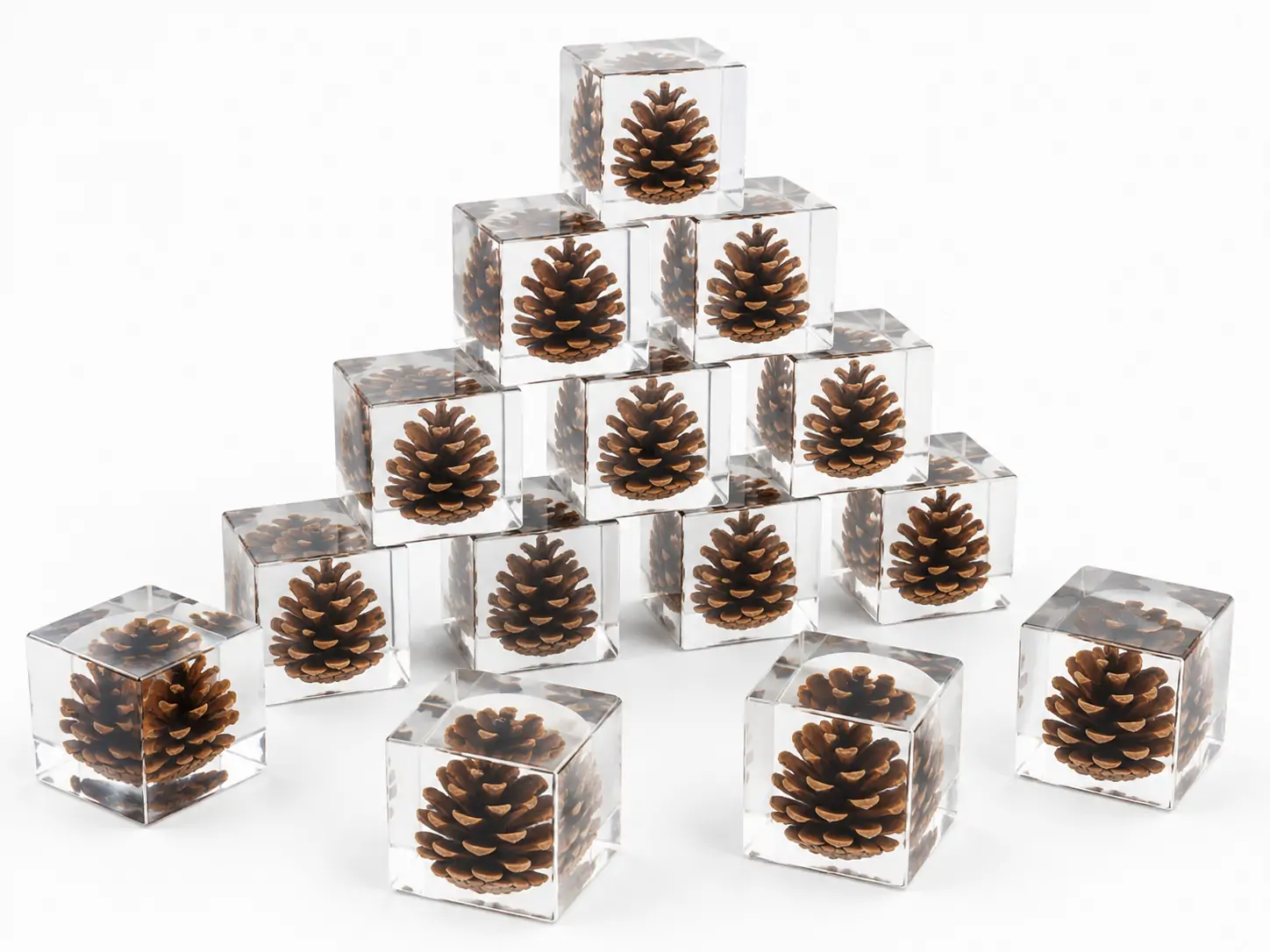
- Dried flowers, insects and small keepsakes
- Small transparent ornaments
- Short-cycle small-batch production
When Should You Consider 3:1 Epoxy Resin?
3:1 epoxy resin should be evaluated when the finished product requires higher cured hardness or stronger shape retention.
It may be considered when:
- The cured product needs a harder surface
- Stronger shape retention is required
- The finished product should feel less flexible
- The current 1:1 sample cures too soft
A 3:1 ratio does not automatically mean higher clarity, better bubble release, better flow or stronger yellowing resistance. It should not be treated as an overall premium upgrade.
Select the Resin by Finished Product
| Finished Product | Recommended Starting Direction | Main Testing Focus |
|---|---|---|
| Resin Jewelry and Jewelry Components | Start with 1:1 | Clarity, bubbles, demolding, edge quality and finished appearance |
| Alphabet and Keychain Molds | Start with 1:1; compare 3:1 if more hardness is needed | Flow, pigment compatibility, curing speed and deformation resistance |
| Dried Flowers and Small Specimens | Start with 1:1 | Clarity, exotherm, bubbles, discoloration and layered casting |
| Hard Decorative Pieces and Small Ornaments | Compare 1:1 and 3:1 | Hardness, shape retention, brittleness and surface appearance |
| Batch Production with Small Molds | Select by cycle and hardness | Ratio accuracy, working time, demolding cycle and batch consistency |
Pour Depth and Batch Size Still Matter
Based on the current product information, a product thickness of up to approximately 5 cm may be evaluated at a total resin quantity of around 150 g.
This is a reference condition only. It must not be scaled directly to larger molds, larger batch sizes, higher temperatures, other formulas or large-volume casting.
Control factors include total mixed quantity, the thickest point of the mold, material temperature, room temperature, pigments and fillers, flowers and embedded objects, one-time versus layered casting, and signs of overheating, shrinkage, cracking or abnormal yellowing.
What Else Should Be Tested for Jewelry and Small Molds?
Transparency is only one requirement. Buyers should also test:
- Measuring consistency
- Bubbles after mixing
- Natural bubble release
- Flow into letters, corners and fine details
- Pigment compatibility
- Glitter and dried-flower compatibility
- Effect of embedded materials
- Surface-dry time, demolding time and full-cure time
- Hardness, brittleness, scratches and edge quality
- Repeated-batch consistency
Which Applications Should Not Use This Small-Craft Epoxy?
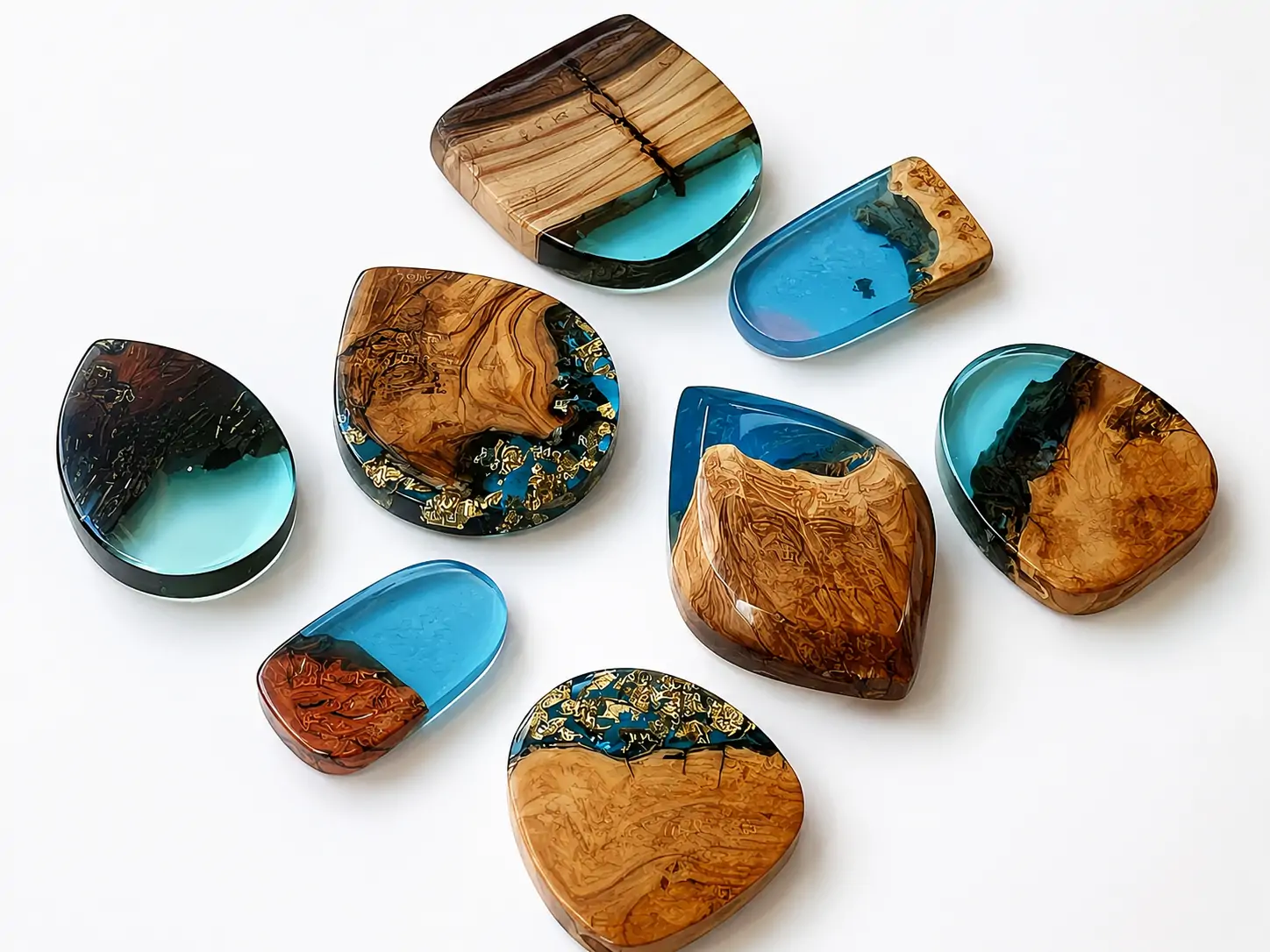
- River Tables, Wood Slabs and Large Deep Pours: use a dedicated river-table or deep-pour formula.
- Large Thick Furniture or High-Volume Molds: exotherm and cure-control requirements are different.
- 3D Decorative Flooring: application area, layer structure and substrate preparation are different.
- Domed Labels and 3D Stickers: use a dedicated Doming Resin.
- Structural Bonding or Repair: this small-craft epoxy is not positioned as a repair adhesive.
River Table Epoxy Solutions Decorative Epoxy Flooring Doming Resin Solutions
Information to Provide Before Purchasing
| Finished Product | Jewelry, keychain, alphabet, flower specimen, small ornament or another molded product |
|---|---|
| Mold Size and Maximum Thickness | Length, width, height and thickest point |
| Total Mixed Quantity | Approximate grams or kilograms per batch |
| Target Cured Result | Standard hardness, higher hardness, faster demolding or high clarity |
| Additives | Pigments, glitter, dried flowers, fillers or embedded objects |
| Production Method | Manual small batch, repeated production or automatic metering and mixing |
Conclusion
For most small molds and decorative products, 1:1 epoxy resin is the normal starting point because equal-volume measurement is easier to understand and standardize.
3:1 epoxy resin should be evaluated when the finished product requires higher cured hardness or stronger shape retention.
Final testing must use the actual mold, resin quantity, temperature and additives. This product direction is not for river tables, large deep pours, flooring or domed labels.
Frequently Asked Questions
1:1 is usually easier to understand because Part A and Part B are measured by equal volume. However, accurate measuring, mixing and testing are still required.
3:1 is positioned here as a higher-hardness direction, but ratio alone does not guarantee the same hardness across every formula. The selected formula TDS and sample testing remain the final reference.
For many jewelry and small-mold production projects, 1:1 is the normal starting direction because equal-volume measurement is easier to train and repeat. 3:1 may be evaluated when a harder finished result is required.
Based on current product information, up to approximately 5 cm may be evaluated at a total resin quantity of around 150 g. This is a reference condition only. Mold size, temperature, total batch quantity and selected formula must still be tested before production.
No. River tables and large deep pours require dedicated resin systems with different exotherm, working-time and cure-control requirements.
NEXT STEP
Need Help Choosing 1:1 or 3:1 Epoxy for Small Molds?
Share the finished product, mold dimensions, maximum thickness, batch size, target hardness and production cycle. Our team can help identify a suitable sample direction.
Explore Small Resin Craft Solutions