Quick Answer: Start with the Use Environment
| Selection Factor | Start with Epoxy Doming Resin | Consider PU Doming Resin |
|---|---|---|
| Use Environment | Standard indoor labels, stickers, badges and nameplates | Long-term outdoor, sunlight or more demanding exposure |
| Cured Character | Soft, medium-soft, medium-hard or hard options | Usually selected for flexibility, resilience and low-temperature performance |
| Main Advantage | More competitive cost and broader formula selection | Better direction for stronger yellowing resistance and outdoor durability |
| Typical Mix Ratios | 3:1 / 2:1 | 3:1 / 1:1 |
This table is an initial guide only. Final selection should be confirmed using the actual substrate, printing ink, dispensing equipment, product structure and use environment.
When Should You Start with Epoxy Doming Resin?
For standard indoor labels, start by evaluating an appropriate epoxy formula direction.
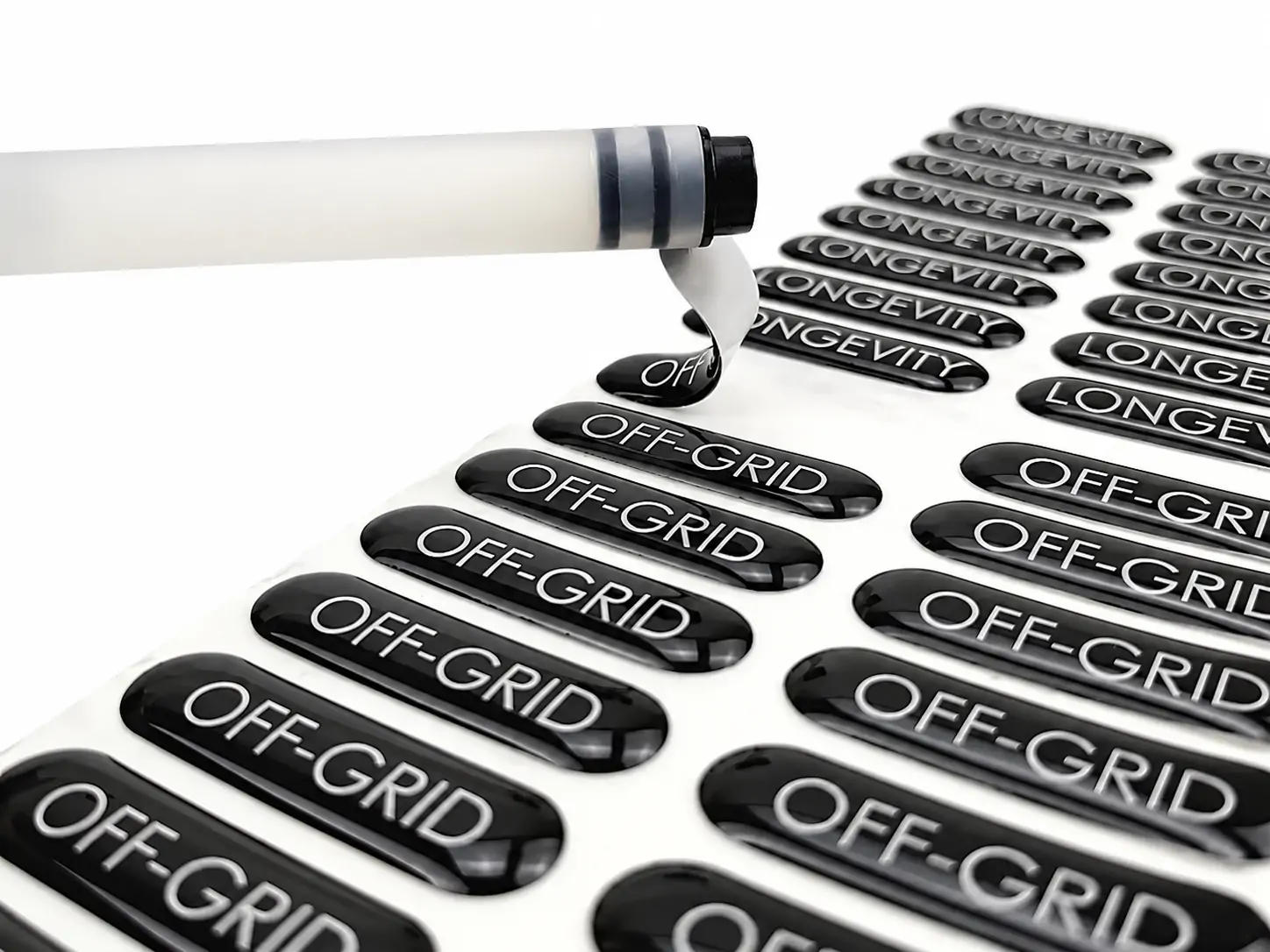
Epoxy doming resin is the main starting choice for standard indoor labels and 3D sticker production. Its advantage is not simply that it is harder. Different epoxy formulas can cover soft, medium-soft, medium-hard and hard cured directions, while maintaining a clear appearance and a competitive cost position.
Epoxy doming resin is usually suitable when:
- The finished product is mainly used indoors and is not exposed to long-term sunlight or outdoor weather.
- The buyer needs to choose between soft labels, standard 3D stickers, rigid badges or nameplates.
- Production priorities include cost, clarity, leveling, curing speed or stable batch dispensing.
- The production system uses 3:1 or 2:1 equipment and needs to match a suitable formula within the existing process.
For standard indoor applications, buyers should not upgrade directly to PU only because PU sounds more weather-resistant. If epoxy can meet the use environment, cured feel and production efficiency requirements, epoxy is often more practical for purchasing cost and repeat production management.
When Should You Consider PU Doming Resin?
PU doming resin should be treated as a supplementary direction for specific requirements, not the default upgrade for every label project. It is more suitable when the finished product faces long-term outdoor sunlight, temperature changes, or requires a flexible and resilient cured layer.
Buyers may evaluate PU when:
- Labels, signs or badges will be installed outdoors for long-term exposure and yellowing resistance is a core requirement.
- The finished product needs bending, pressure resistance or light impact resistance, and the cured layer cannot be too rigid.
- The customer wants a better balance between clarity retention, flexibility and outdoor weathering requirements.
- The product needs to maintain flexibility under low-temperature conditions.
- Existing epoxy samples show obvious yellowing or brittleness in actual outdoor testing and cannot meet the target service life.
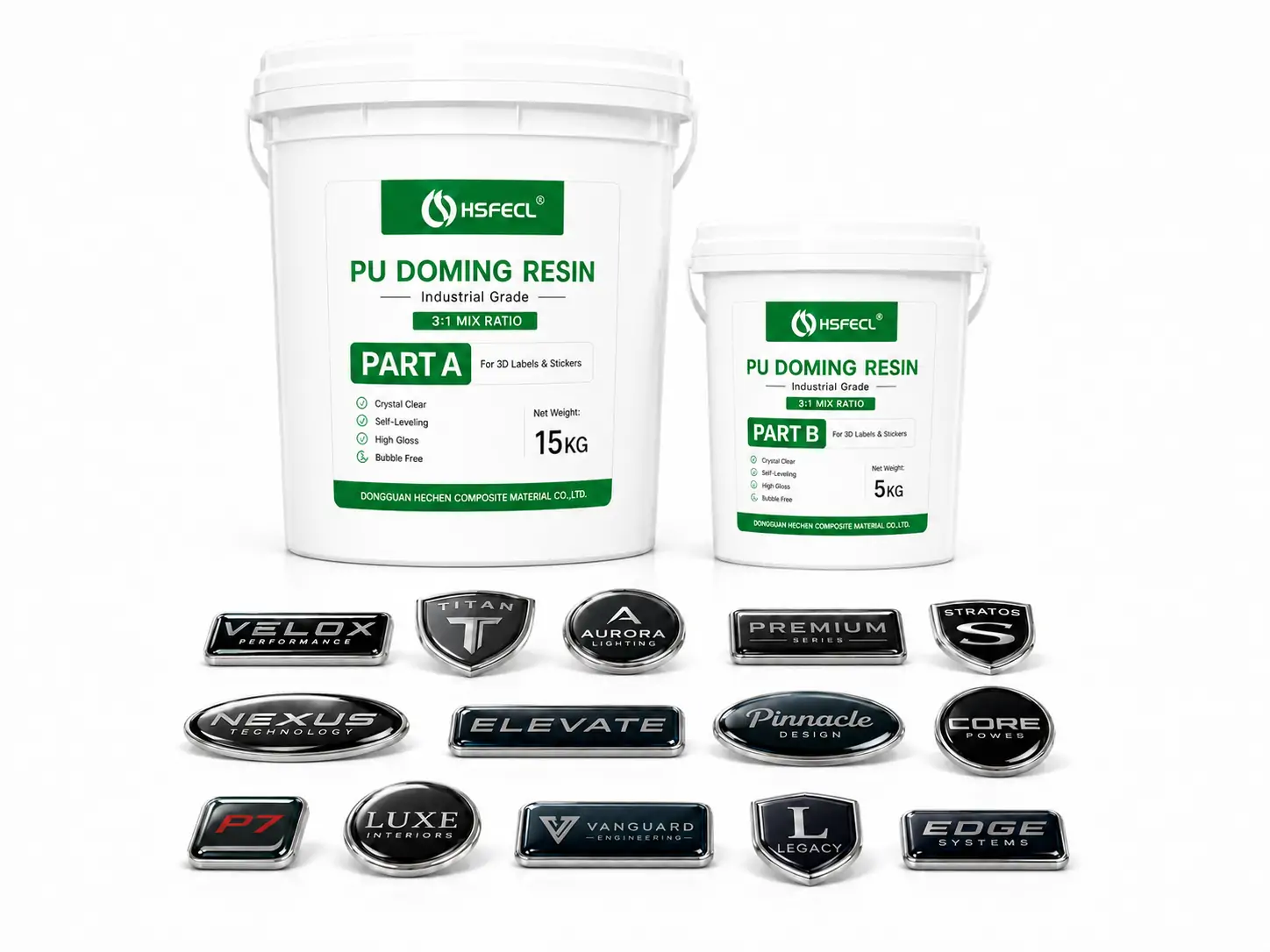
In HSFECL's current positioning, 3:1 PU Doming Resin is a balanced option between production cost and outdoor performance. 1:1 PU Doming Resin is more suitable for projects prioritizing easy mixing, long-term clarity and stronger yellowing-resistance positioning. Specific performance should still be confirmed through the relevant product information and actual testing.
View Outdoor PU Doming Resin Options
Yellowing Resistance Does Not Mean "Never Yellows"
"Yellowing-resistant resin for labels" usually means the material has stronger yellowing-resistance ability under certain testing or use conditions. It does not mean that any PU material will never change color in all outdoor environments.
Actual yellowing performance may be affected by UV intensity, daily exposure time, temperature, humidity, rainfall, installation direction, shading, resin thickness, pigments, printing ink, substrate, service life and the customer's acceptable color difference.
Appropriate Wording
- Stronger yellowing-resistance performance
- Suitable for higher outdoor weathering requirements
- Improved long-term clarity positioning
Avoid Absolute Claims
- Never yellows
- Permanent UV resistance
- Guaranteed outdoor life under all conditions
Do Not Select the Material by Mix Ratio Alone
3:1, 2:1 or 1:1 only refers to the mixing ratio between Part A and Part B. It is not the same as material category and cannot independently determine cured hardness, transparency or weathering performance.
| Product Direction | Typical Ratio | Main Selection Focus |
|---|---|---|
| Epoxy Doming Resin | 3:1 / 2:1 | Indoor use, cured character, cost, clarity, curing and dispensing requirements |
| 3:1 PU Doming Resin | 3:1 | Balance between outdoor requirements and production cost |
| 1:1 PU Doming Resin | 1:1 | Mixing convenience, stronger outdoor clarity and yellowing-resistance positioning |
- Indoor or outdoor use
- Flexible or rigid cured layer
- Equipment and production requirements
- Suitable product direction
- Final mix ratio
Production and Substrate Testing Are Equally Important
Whether the buyer chooses epoxy or PU, the material name alone cannot determine whether it is suitable for repeat production. The doming result is also affected by equipment ratio, viscosity, mixing head, dispensing volume, ambient temperature and curing conditions.
Before confirming a sample, buyers should provide:
- Finished-product type
- Indoor or outdoor use and expected service life
- Required cured character
- Actual substrate such as PVC, PET, acrylic or metal
- Printing ink or coating
- Manual, semi-automatic or automatic dispensing
- Supported equipment ratio
- Current production problem
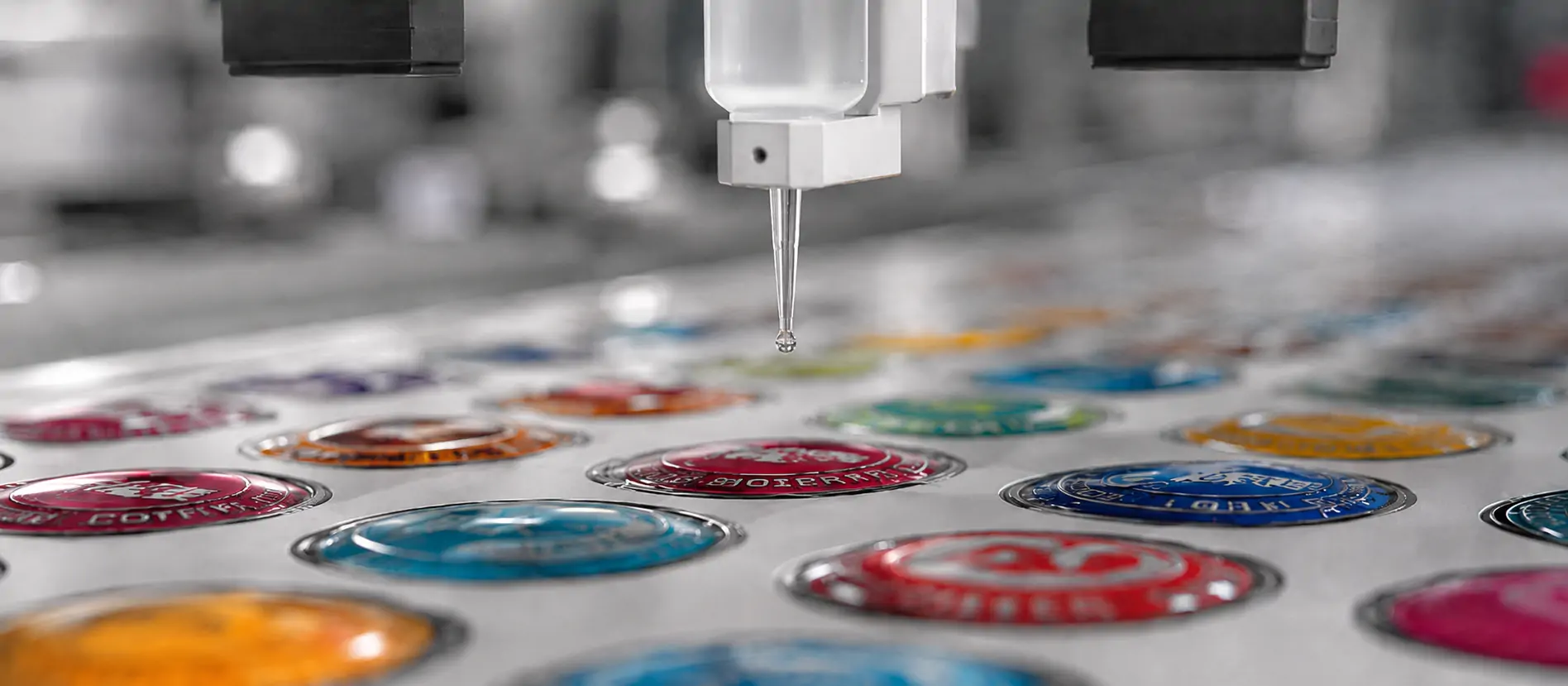
A sample produced only on a blank plastic sheet cannot fully represent adhesion, appearance or weathering performance in production.
Quick Buyer Selection Checklist
| Buyer Requirement | Starting Direction | Recommendation |
|---|---|---|
| Standard Indoor Labels with Cost and Production Priorities | Epoxy Doming Resin | Compare soft, medium-soft or hard formula directions |
| Indoor Rigid Badges or Nameplates | Medium-Hard / Hard Epoxy | Test hardness, clarity and brittleness |
| Outdoor Labels Where Yellowing Resistance Is Critical | PU Doming Resin | Test under actual regional exposure conditions |
| Low-Temperature Application | PU Doming Resin | Confirm substrate adhesion and bending performance |
| Unclear Indoor Life or Outdoor Classification | Provide Application Details First | Let the supplier match Epoxy or PU sample directions |
Conclusion
For most indoor labels, 3D stickers, badges and nameplates, Epoxy remains the more practical starting point. It provides a more competitive cost position and a broader cured-character selection range.
PU is supplementary when long-term outdoor exposure, low-temperature flexibility, stronger yellowing resistance or a resilient cured layer is required. Material selection should not be based only on the words "epoxy" or "PU", and it should not be based only on mixing ratio. It should be confirmed through use environment, cured character, equipment, substrate and actual testing.
Frequently Asked Questions
Usually not. If epoxy doming resin can meet indoor use, cured-character and production requirements, epoxy usually has a stronger cost advantage. PU should be evaluated only when outdoor exposure, flexibility or stronger yellowing resistance is clearly required.
No. PU usually provides a stronger yellowing-resistance direction than standard epoxy, but final performance still depends on formula, environment, thickness, substrate and service life.
It must be tested according to the actual exposure conditions and the customer's target. Standard epoxy is mainly positioned for indoor applications and should not be assumed to meet outdoor weathering requirements only because the use period is short.
3:1 PU is more balanced between cost and outdoor performance. 1:1 PU is more suitable when simpler mixing, long-term clarity and stronger yellowing-resistance positioning are stronger priorities. Final selection should be based on samples and the relevant technical information.
No direct assumption should be made. The equipment ratio, pumps, seals, viscosity range, mixing head and cleaning process must be confirmed, and actual equipment testing is required.
NEXT STEP
Need Help Choosing Between Epoxy and PU Doming Resin?
Share the product type, indoor or outdoor environment, target cured character, substrate and dispensing method. Our team can help determine whether standard epoxy is sufficient or whether a PU sample direction should be evaluated.
View Outdoor PU Doming Resin Options